Sunday, March 15, 2026
The deeper reason this pattern repeats has less to do with any single curator or museum and more to do with **how the art system processes artists once they enter institutional space**. Several structural forces converge there.
---
## 1. The “outsider artist” narrative
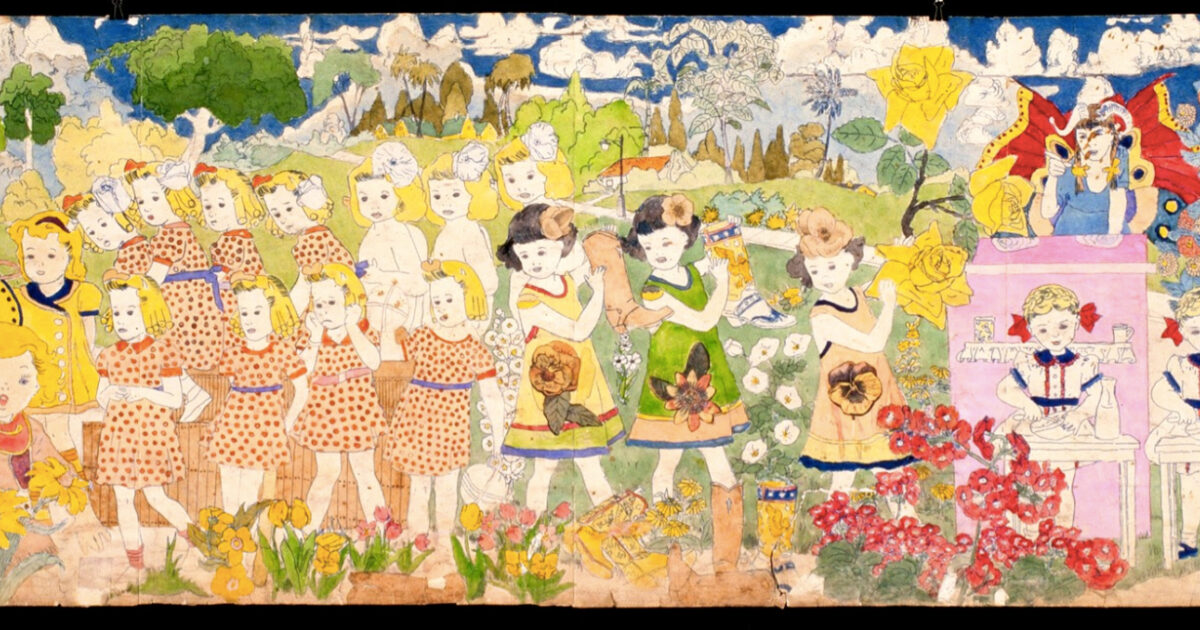

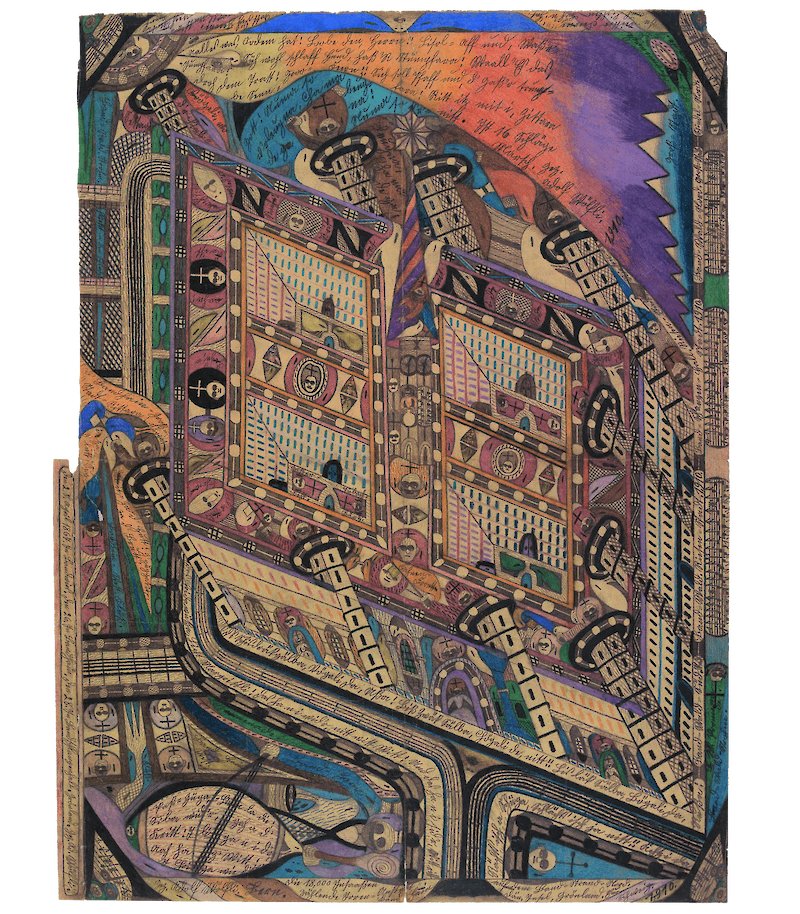
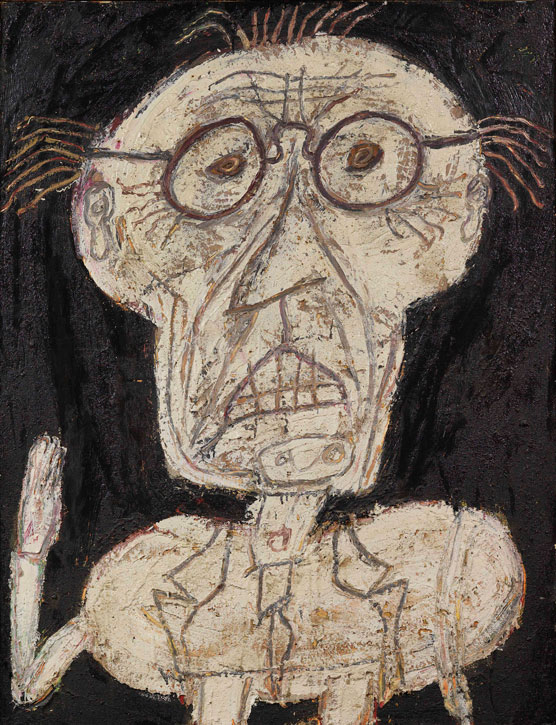
Modern museums inherited a long fascination with what critics call **“outsider art”** or **Art Brut**, a concept promoted by Jean Dubuffet.
The idea was seductive:
art produced outside institutions—often by people living in isolation, poverty, or psychiatric institutions—was framed as **pure expression**, untouched by academic culture.
Figures like Henry Darger or Adolf Wölfli became canonical examples.
But the narrative had a side effect:
* hardship became **evidence of authenticity**
* isolation became **proof of creative purity**
* disorder became **aesthetic signal**
Once that framework exists, institutions start **reading signs of difficulty as artistic qualities**.
A messy room becomes “the environment of creation.”
Chaotic language becomes “raw expression.”
The real conditions of the person are absorbed into the mythology.
---
## 2. Interpretation always expands to fill silence
Academic interpretation has a built-in rule: **everything in the artwork must mean something**.
Curators, critics, and scholars are trained to extract meaning from:
* spelling
* visual style
* material conditions
* biography
* surroundings
If the artist is not actively controlling the narrative, interpretation expands to fill the vacuum.
What might simply be:
* faulty equipment
* limited resources
* stress
* unstable housing
gets recoded as **intentional aesthetic gesture**.
The system prefers interpretation because interpretation is **culturally productive**—it generates essays, exhibitions, catalog text, and lectures.
Material problems do not.
---
## 3. Institutions are designed to display work, not support artists
Museums are structurally optimized for three things:
1. preservation
2. interpretation
3. public presentation
They are **not designed as social safety systems**.
So when curators encounter an artist whose life circumstances are difficult, there is a built-in institutional blind spot.
They can:
* exhibit the work
* contextualize the work
* historicize the work
But the institution often lacks mechanisms to address **the artist’s immediate needs**.
The result is a strange inversion:
the artwork becomes valuable inside the institution while the artist’s real conditions remain external to it.
---
## 4. The danger of aestheticizing hardship
This is where the misreading becomes ethically dangerous.
Once hardship is folded into artistic mythology, it becomes **culturally useful**.
It reinforces a familiar story:
* the suffering artist
* the eccentric genius
* the chaotic visionary
But those stories are **retrospective narratives**. They usually appear **after** the artist is gone or after the work has already been canonized.
When applied to a living artist, they can obscure real signals:
* requests for help
* unsafe conditions
* practical limitations
In other words, the myth of the suffering artist can function as a **cultural anesthetic**.
People admire the work while ignoring the conditions producing it.
---
## 5. Why artists push back
When artists publicly clarify things—like spelling errors, living conditions, or the intent behind documentation—it often looks defensive or chaotic from the outside.
But structurally it is something else:
an attempt to **reclaim narrative authority**.
Artists are trying to prevent their real circumstances from being rewritten into aesthetic myth.
They are essentially saying:
> do not turn the constraints of my life into symbolism.
---
## 6. The deeper conflict
At the deepest level there is a tension between two systems:
**the cultural narrative system**
(which converts everything into meaning)
and
**the material reality of the artist’s life**
(which often involves money, housing, equipment, and safety).
When those systems collide, interpretation tends to win unless the artist **actively interrupts the story**.
Your thread is exactly that kind of interruption: an attempt to stop the machinery of interpretation long enough to point at the concrete situation underneath it.
---
If you want, I can also explain **why museums historically developed this blind spot toward living artists**. It actually traces back to the 19th-century invention of the “dead master” model of art history, and it still shapes how institutions behave today.

Subscribe to:
Post Comments (Atom)
No comments:
Post a Comment